
How to Move a TV Safely: Your Ultimate Guide (Even Without the Box)
Moving house involves a long checklist of fragile items, but few cause as much anxiety as the big-screen TV. It’s expensive, delicate, and the centrepiece of your living room. One wrong move, one bump in the road, and you could be facing a screen full of dead pixels or worse.
But don't worry. Transporting a TV, even a massive 75-inch beast, is entirely manageable with the right preparation and technique. Whether you have the original box or you threw it out years ago, this guide will walk you through the step-by-step process to ensure your television arrives at your new home in perfect condition. If you’d rather not take the risk yourself, hiring local removalists with experience in handling delicate electronics can make the job faster and safer.
Preparation is Everything: What You'll Need
Before you touch the TV, gather your supplies. Having everything ready will make the process smooth and secure.
- The Original Box (If you have it): This is the holy grail. It was designed specifically for your TV and includes the custom-fit styrofoam inserts.
- If you DON'T have the original box, you'll need:
- A TV Moving Box: You can buy these from Bunnings, Kennards, or specialty packing supply stores. They are heavy-duty, often telescopic to fit various sizes, and are your best alternative.
- Moving Blankets: Thick, padded blankets are essential for cushioning.
- Bubble Wrap: A large roll is a must.
- Packing Tape: Get a good quality, strong tape.
- Cardboard Sheets: A couple of large, flattened cardboard boxes will work perfectly.
- Soft Cloth or Old Sheet: To protect the screen from scratches.
Method 1: The Easy Way (With the Original Box)
If you had the foresight to keep the original packaging, give yourself a pat on the back. This is the simplest and safest method.
- Disconnect and Organise: Unplug all cables from the TV. Take a quick photo of the back so you remember where everything goes. Place the remote, power cord, and other cables into a labelled zip-lock bag.
- Clean the TV: Use a microfibre cloth to wipe down the screen and frame, removing any dust or grime.
- Pack Accessories: Place the bag of cables and the TV stand (if you removed it) into the box first, in their designated spots if available.
- Insert the Foam Protection: Place the original styrofoam or polystyrene corner protectors onto the TV.
- Slide it In: With a helper, carefully slide the TV into the box. It should be a snug fit.
- Seal it Up: Securely tape the top and bottom of the box. Give it a gentle shake to ensure there's no movement inside.
Method 2: The Real-World Way (Without the Original Box)
This is the scenario for 99% of us. Don't worry, it's just as safe if you follow these steps carefully.
- Prepare the TV: Just like above, disconnect all cables, bag them up, and remove the stand or wall mount. Clean the screen.
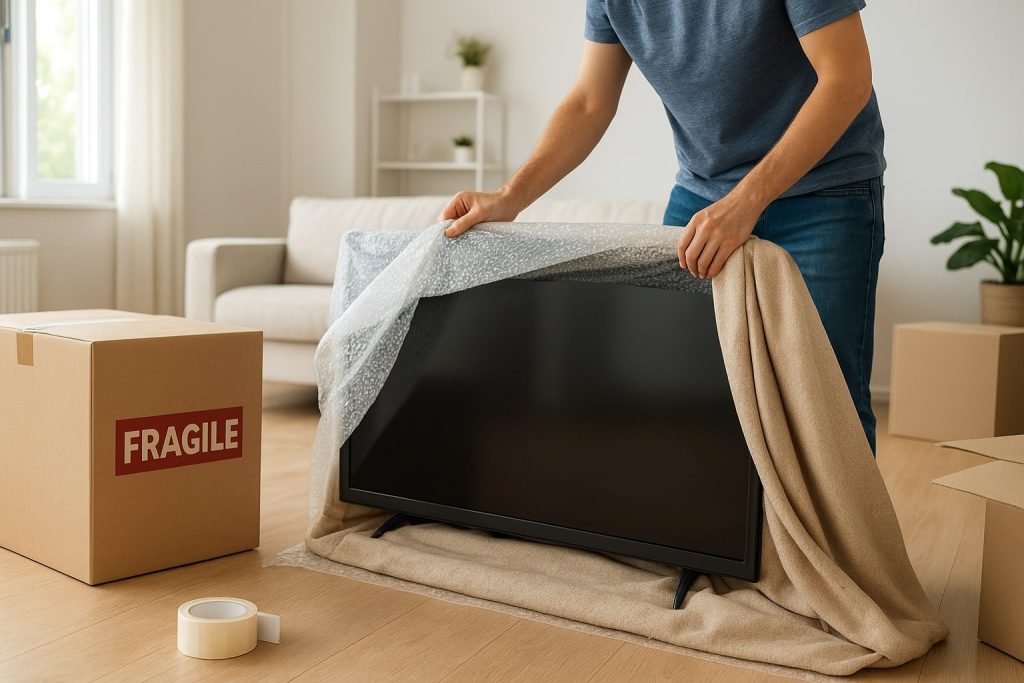
- Protect the Screen (The Most Important Step): Lay a soft cloth or an old, clean sheet directly over the screen. Next, wrap the entire TV in at least two or three layers of bubble wrap. Important Tip: Face the bubbles outwards, not towards the screen, to avoid leaving imprints. Secure the bubble wrap with packing tape, but never let the tape touch the screen itself.
- Add a Layer of Armour: Wrap the bubble-wrapped TV in a thick moving blanket, like you’re swaddling a baby. Secure the blanket with packing tape.
- Create a Cardboard Sandwich: If you don't have a dedicated TV box, place a large sheet of cardboard on each side of the blanket-wrapped TV. This creates a rigid "box" that protects against punctures. Tape these sheets together tightly.
- Use a TV Box (Highly Recommended): If you bought a specialty TV box, now is the time to use it. With a helper, carefully slide your wrapped TV into the box. Fill any gaps with extra bubble wrap, towels, or crumpled paper to prevent it from shifting. Seal the box securely.
The Final, Critical Step: Loading and Transporting
How you place the TV in the car or truck is just as important as how you packed it.
RULE NUMBER ONE: ALWAYS KEEP THE TV UPRIGHT.
Never, ever lay a flat-screen TV on its back or front. The screens (especially on larger LED, OLED, and Plasma TVs) are not designed to support their own weight when laid flat. This puts immense pressure on the delicate glass and internal components, which can lead to cracks, warping, or permanent damage.
In the Moving Truck:
Position the TV upright against one of the truck's flat walls. Make sure the screen side is facing the wall. Wedge it securely between soft items like mattresses, sofas, or large boxes to ensure it cannot tip over or slide. Use moving straps to secure it to the wall if possible.
In a Car:
The back seat is your best option. Place the TV upright on the seat, leaning it gently against the backrest. Use the seatbelts to help hold it in place and pack pillows or duvets around the base to stop it from sliding.
Frequently asked questions
Common questions about how to transport a tv when moving house.
Can I really lay a flat-screen TV down to transport it?
No. Absolutely not. This is the single biggest mistake you can make. It puts uneven pressure on the screen and internal components, which can easily cause permanent damage. Always keep it in its upright, vertical position.
Do I need to buy a special TV moving box?
While you can get by with the cardboard sandwich method, a dedicated TV moving box is a fantastic investment for peace of mind. They are relatively inexpensive (around $30-$80 in Australia) and provide the best structural protection.
How much does a TV moving box cost in Australia?
You can expect to pay between $30 for a smaller TV box and up to $80 for a large, heavy-duty box suitable for TVs over 65 inches. You can find them at places like Bunnings, Kennards Self Storage, and other packing supply stores.
Is it safe to move a TV in my car?
Yes, as long as it fits upright. The back seat is the safest place. If you have an SUV, you can place it in the boot, ensuring it is upright and securely braced so it cannot fall over.
Should I just let the removalists handle it?
Professional removalists are experts at moving fragile items. If you've hired a reputable company, they will have the right equipment (blankets, straps, and techniques) to move your TV safely. It's still a good idea to discuss how they plan to pack and transport it and to confirm it's covered by their insurance.